
Tenancy you can trust
Organizations and branches isolated in SQL that fails closed. Staff can act as an organization or a user, and every request is audited.
Tenancy →Try searching for
Start here
The backend
Reference & operations

 Innovix Matrix System
A multi-tenant kit with the app your customers use, the console your staff use, and the API, queue and scheduler behind them, traced end to end with OpenTelemetry. Start from a working product and add your own modules.
make migrate seed && make devGo 1.26 · PostgreSQL 16+ · CGO-free · OpenTelemetry
/The apporganization workspace and staff consoleReact 19/api/v1HTTP APItenants, roles, billing, files, webhooksOpenAPI 3/devDeveloper dashboardrequests, jobs, logs, commandsbuilt in/docsAPI referencetry every endpointScalar/mcpAI connectorClaude, ChatGPT, CursorOAuth 2.1ims queue:workims scheduleims migrateOpenTelemetry, built in
When one customer says "it's slow", open their trace: the route, each SQL query and Redis command it ran, the service write, the job it queued on another process and the webhook that job sent, timed and in order. Set one variable and traces flow over OTLP; leave it unset and tracing costs nothing.
# .env: set = tracing on
OTEL_EXPORTER_OTLP_ENDPOINT=http://127.0.0.1:4318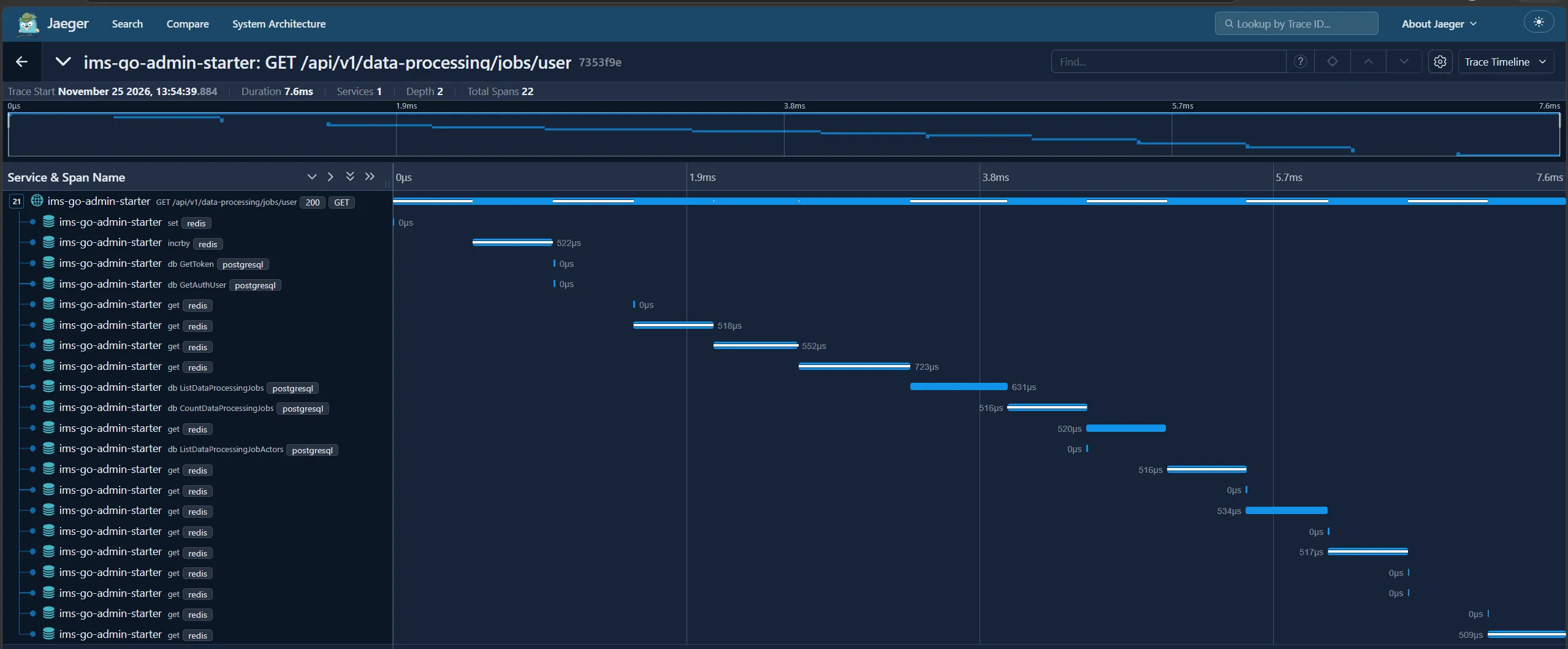
POST /api/v1/branchwith user, organization and impersonatordb CreateBranchthe statement, never its argumentsget, set, incrbythe cache, rate limits and locksbilling.approve_paymentevery write, enforced by a testjob webhook.deliverjoined to the request that queued themPOST hooks.example.comwebhooks, SMS, bKash, S3Every screen below is in the repository and works after make dev.
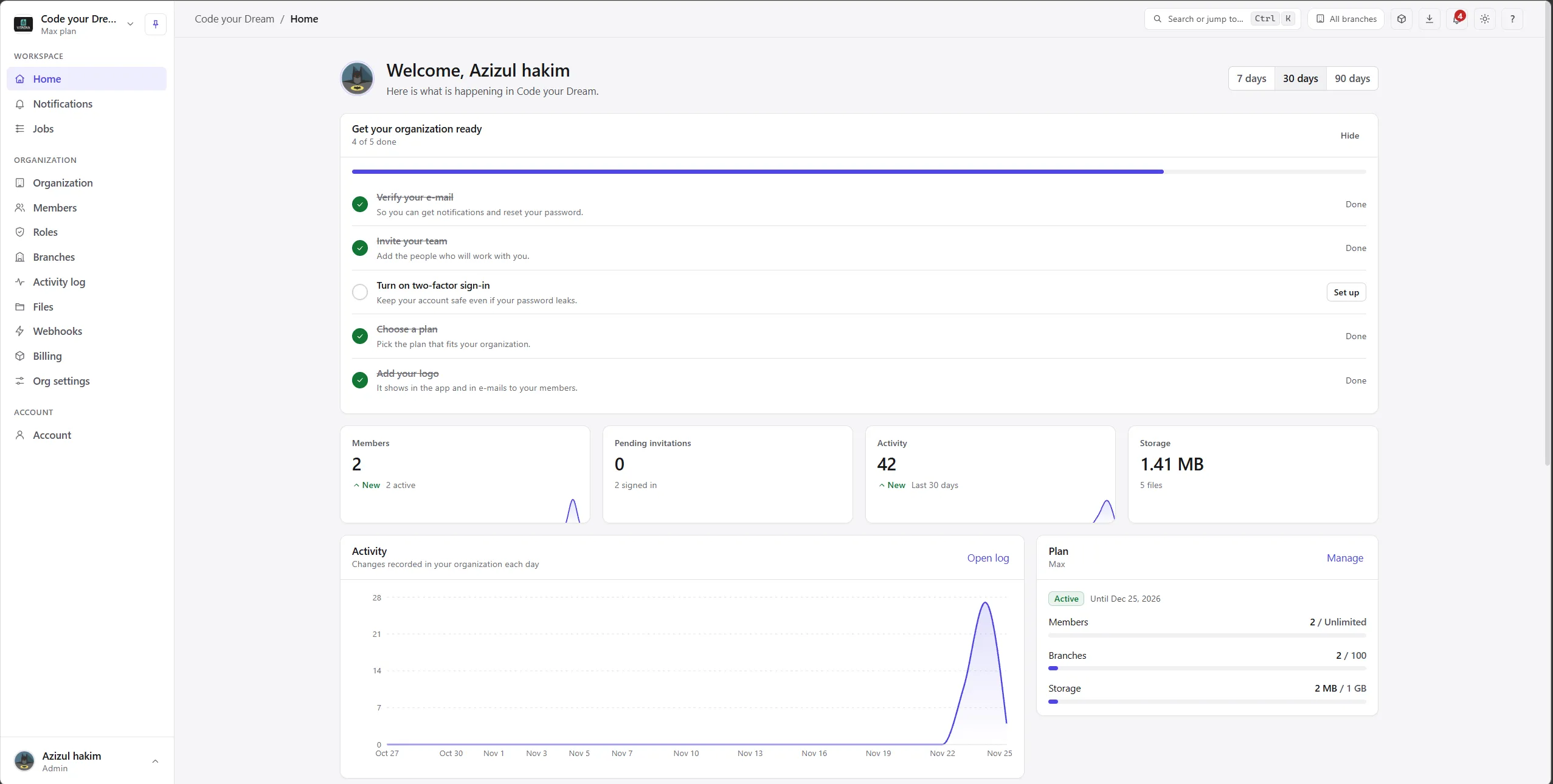
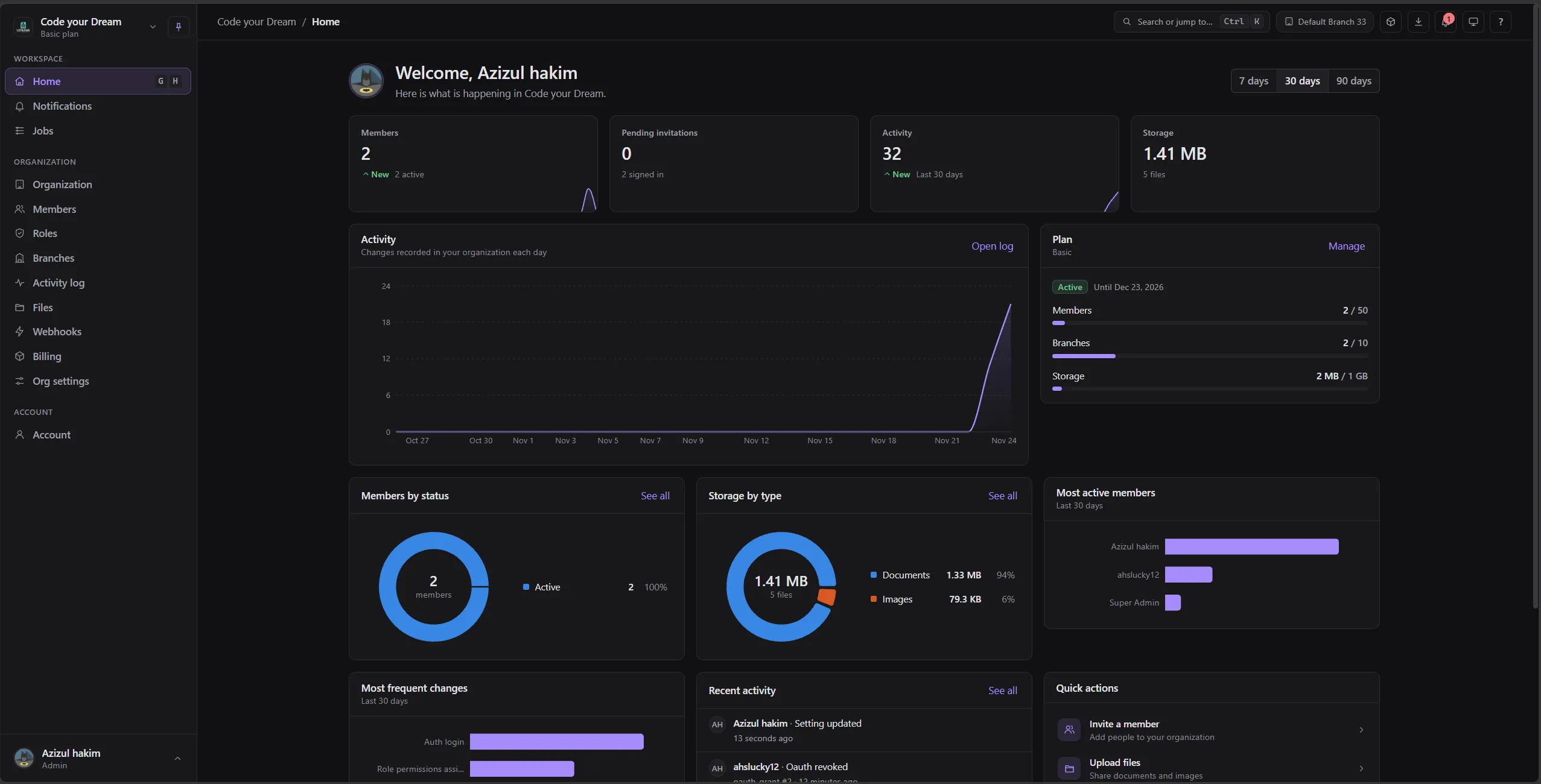
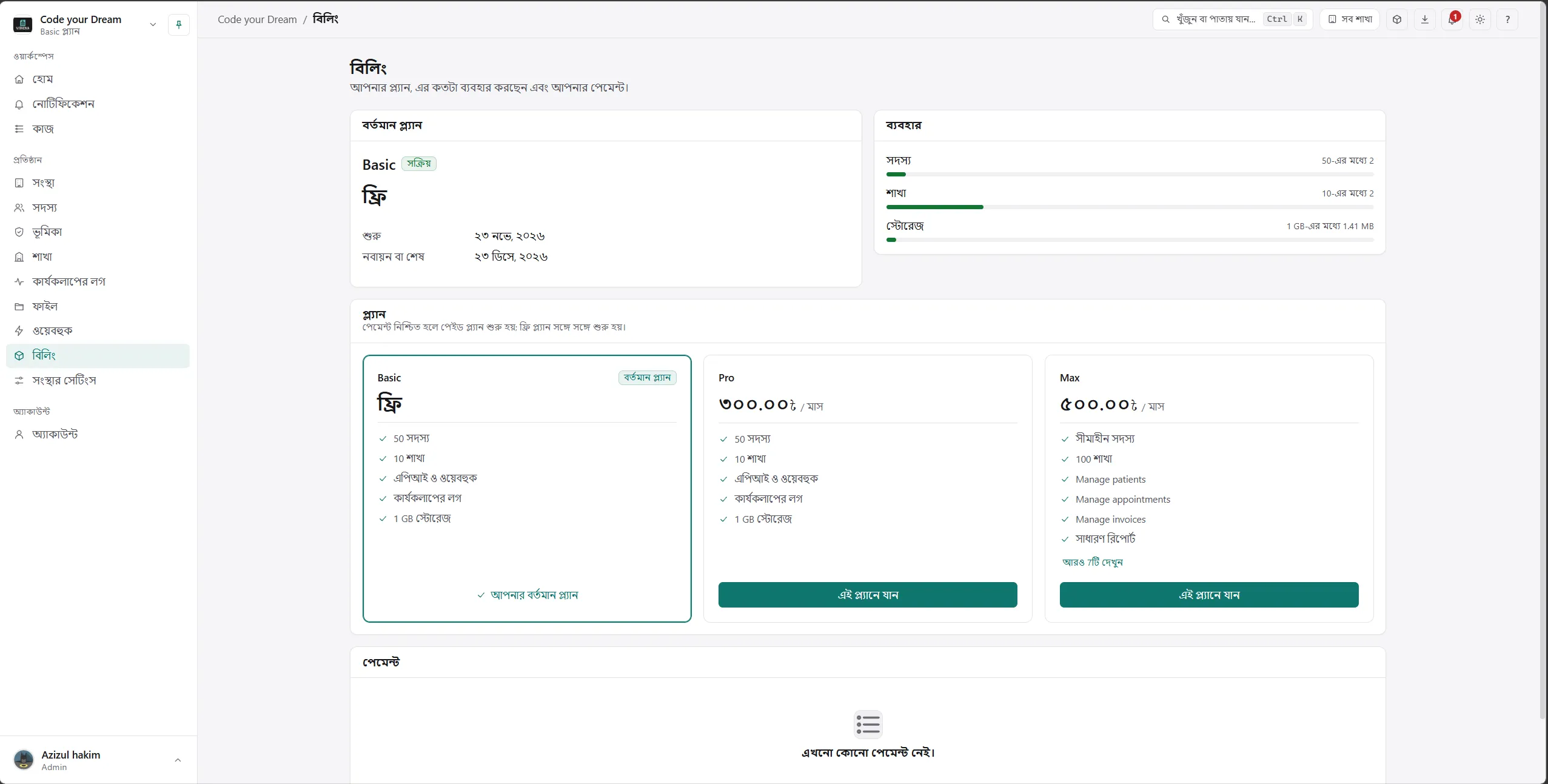
/Organization workspaceMembers, roles, branches, billing, files and activity, for each organization.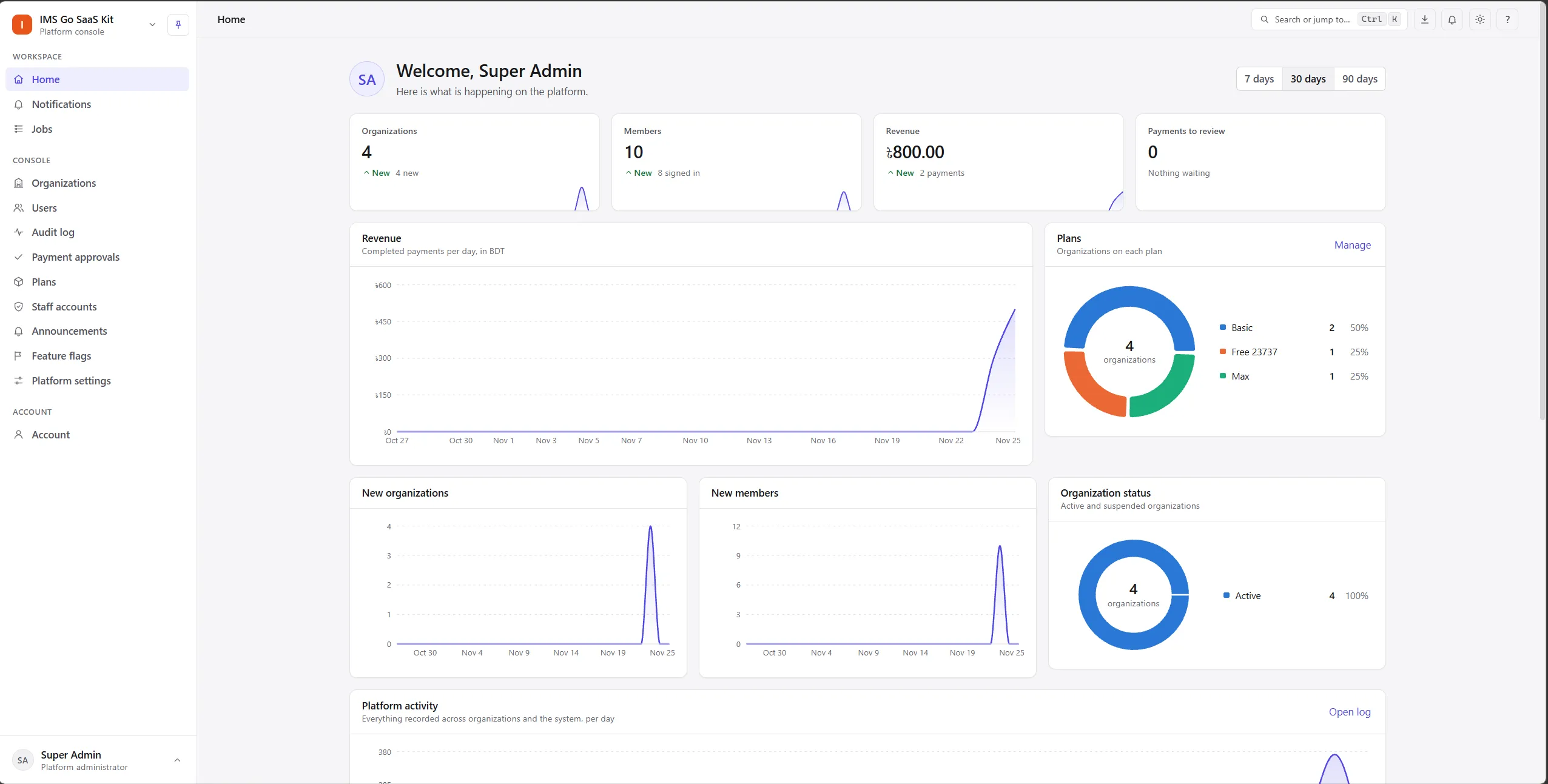
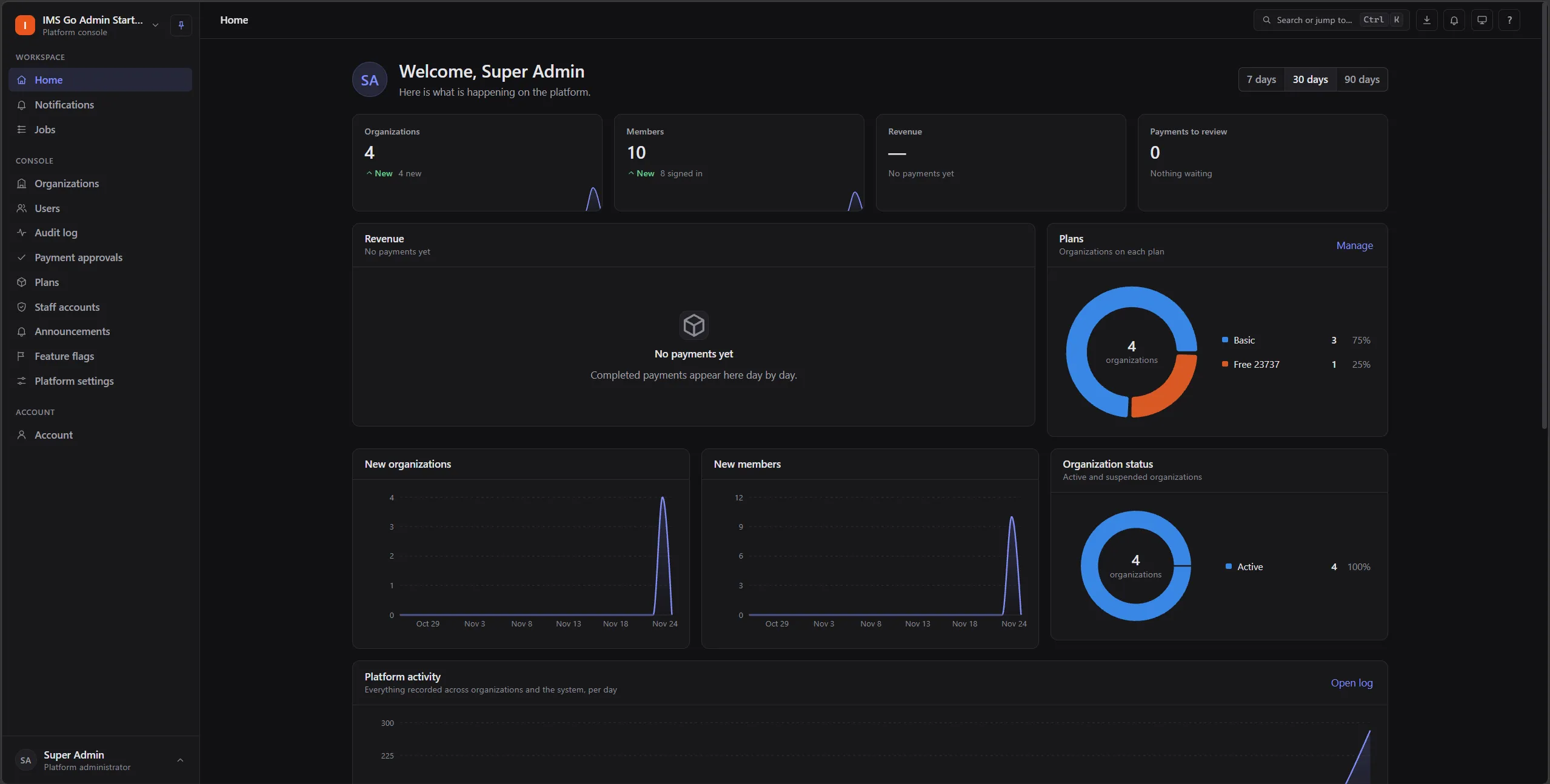
/consoleStaff consoleOrganizations, plans, payment approvals, announcements and the audit log.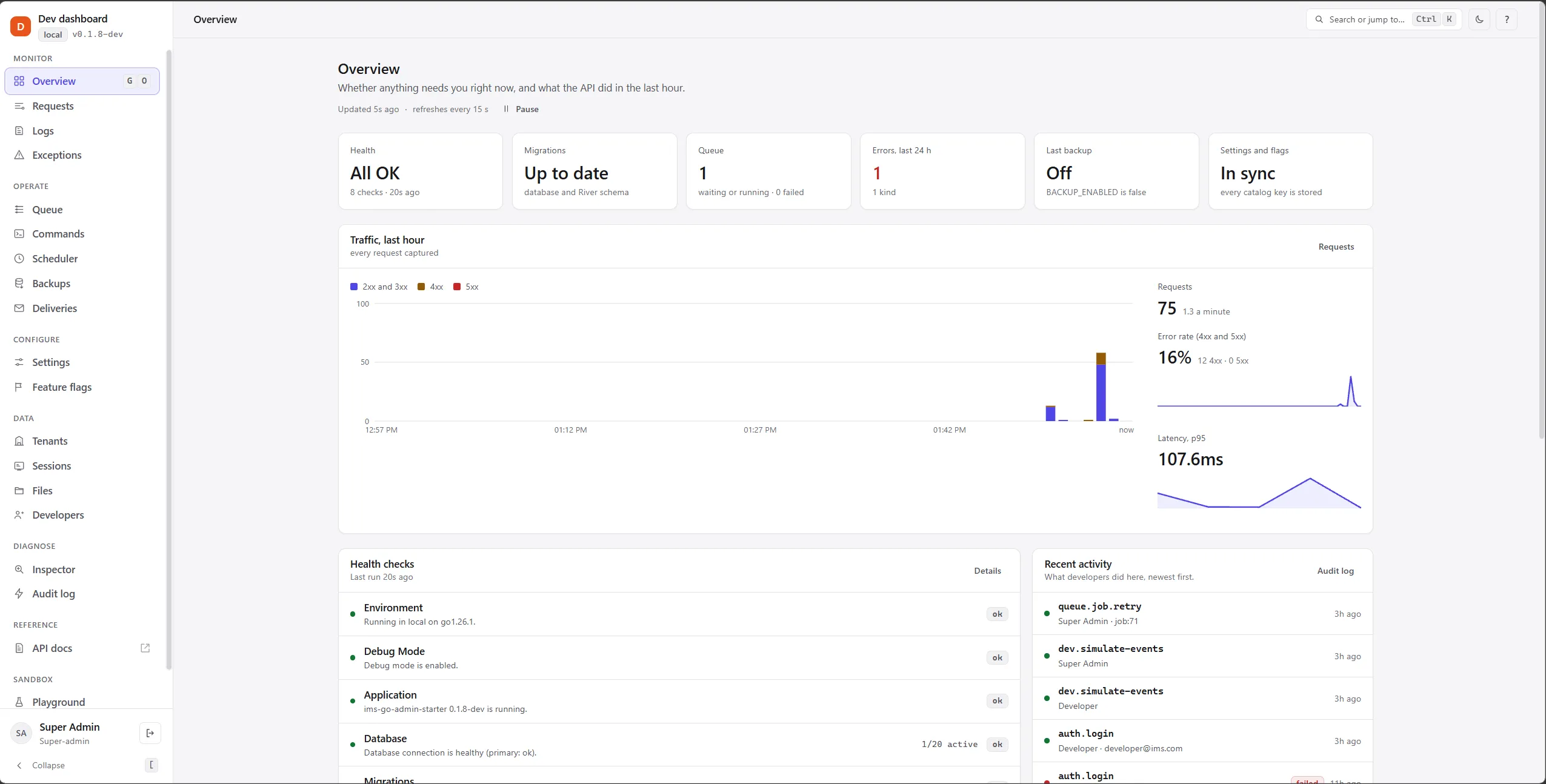
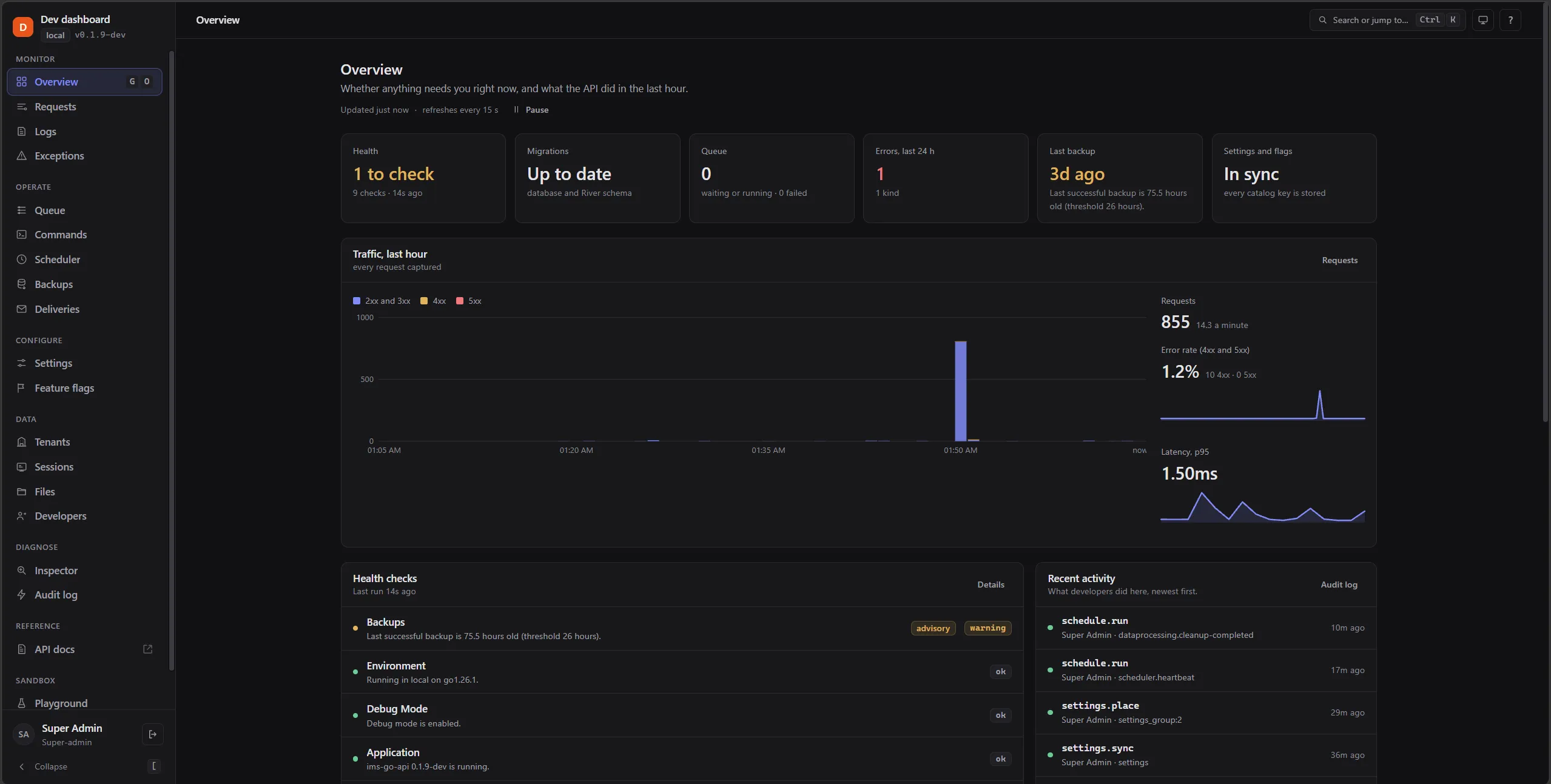
/devDeveloper dashboardLive requests, the queue, schedules, logs and maintenance commands.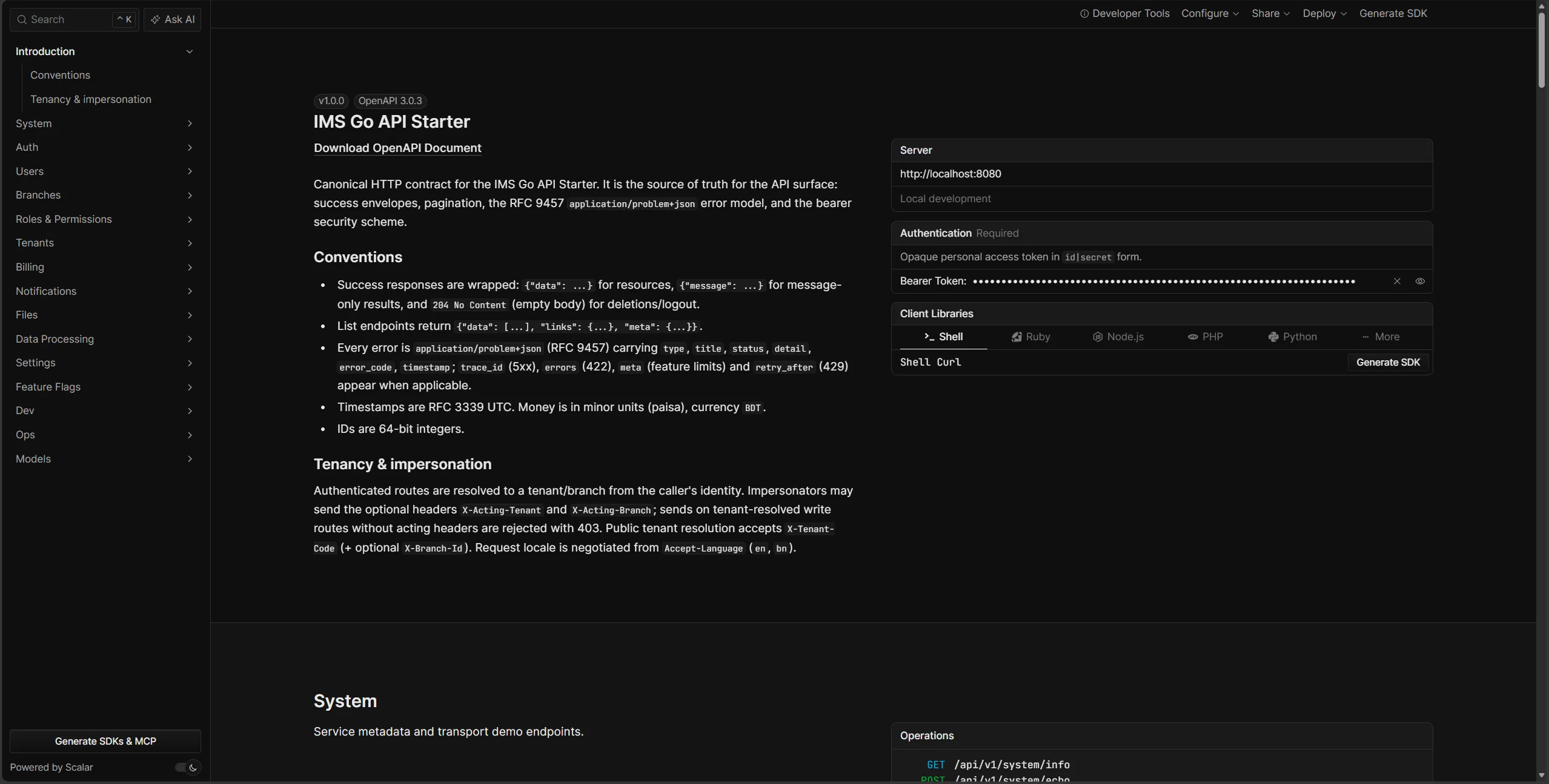
/docsAPI referenceThe OpenAPI 3 contract, checked against the code on every build.The app ships in English and Bangla: menus, charts, dates, numerals and prices, and the API's own messages and e-mails, since every call carries the chosen language. Add a language by translating one file; the build refuses a missing key.
Translations and theming →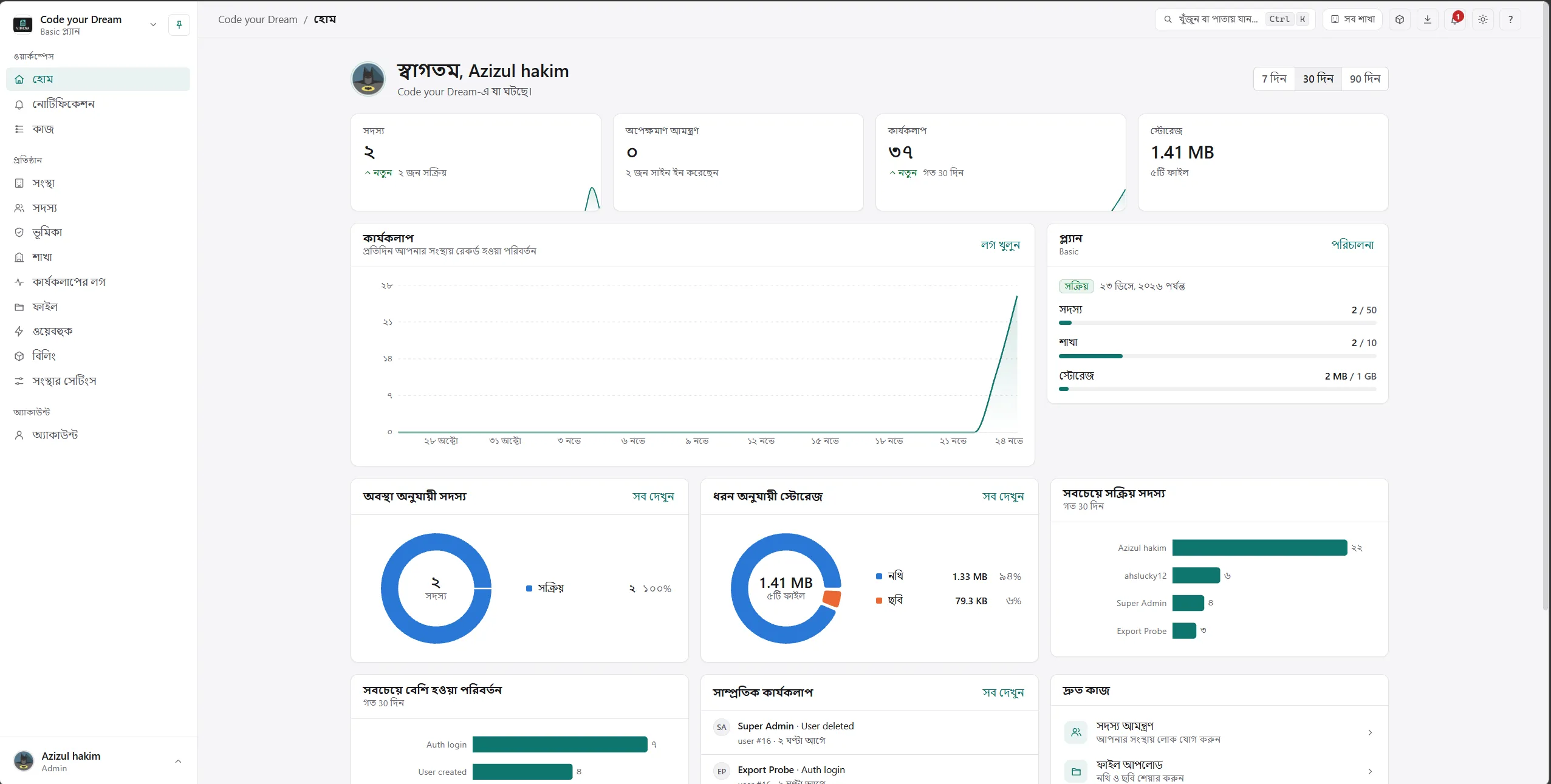
The work every SaaS needs before its first real feature. Each area has a guide.
Organizations and branches isolated in SQL that fails closed. Staff can act as an organization or a user, and every request is audited.
Tenancy →OTP, two-factor by app or e-mail, invitations, revocable sessions, access tokens, Google and GitHub sign-in.
Authentication →Plans with feature limits, self-service checkout, bKash, cash and bank payments with staff approvals.
Billing →A River queue, a cron scheduler, imports and exports with progress, and signed webhooks with retries.
Queue and scheduler →Notifications by feed, mail, SMS and push, with preferences. Announcements with schedules and per-organization stats.
Notifications →RFC 9457 errors, Prometheus metrics, OpenTelemetry tracing, health probes, maintenance mode, systemd or Docker.
Deploy →The tutorial walks this path end to end. Each step links to its guide.
# your module path and names, one commit
make rename \
  MODULE=github.com/acme/shop
go run ./cmd/app gen module \
  --name=product \
  --fields="name:string,price:decimal"
✓ migration, queries, routes, tests
npm --prefix web/app run openapi:gen
# typed client → route → sidebar
/org/products
Built and maintained by Innovix Matrix System
A software studio building custom software, web platforms and mobile apps. We use this kit for our own products, and we can help you ship yours on it.
© 2026 Innovix Matrix System. IMS Go SaaS Kit v0.2.0.